Bridging the gap between visual design and application output
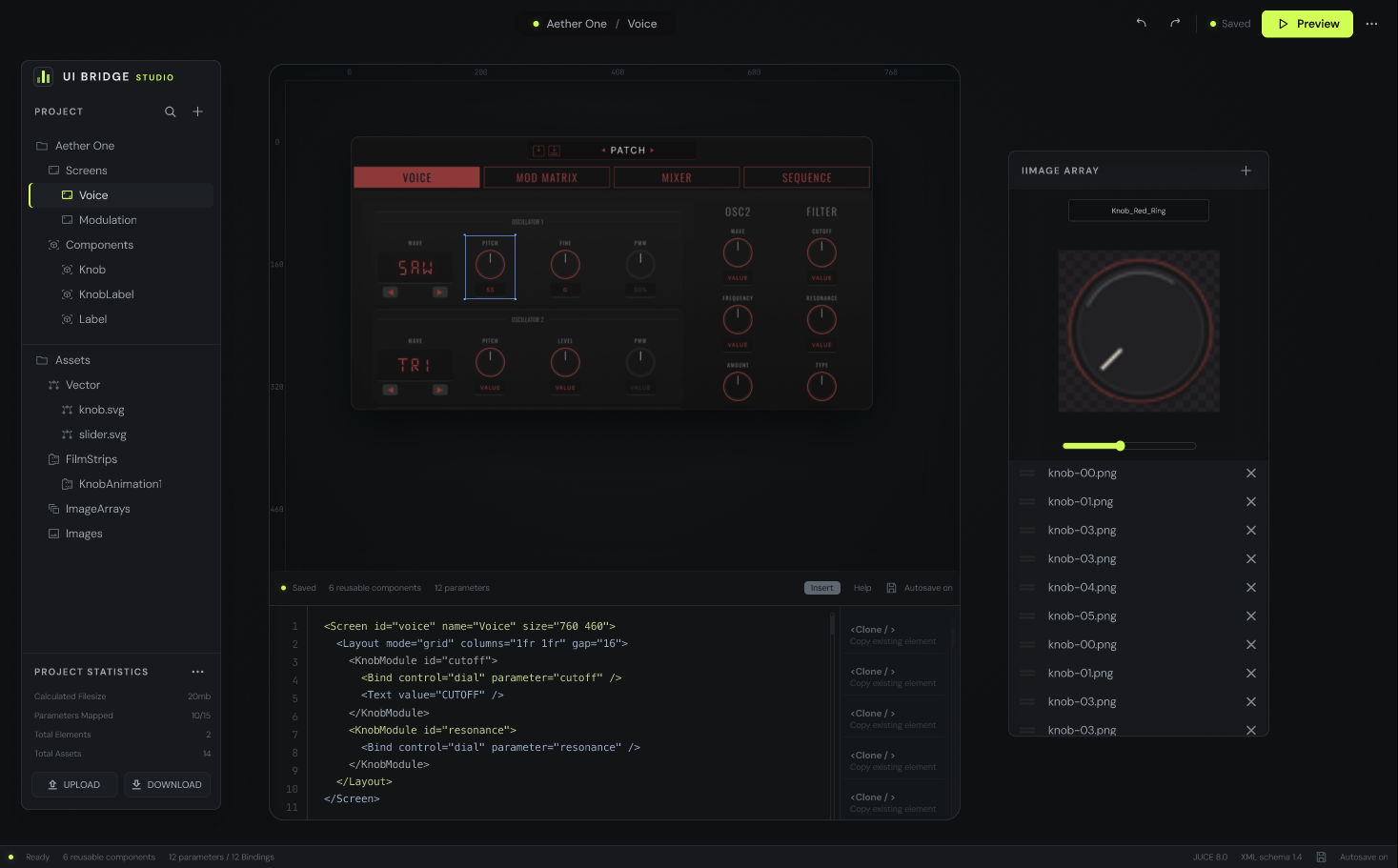
UI Bridge Studio connects a visual interface-authoring environment with a structured system for describing and generating application interfaces. The work combines the design of the tool itself with the representation and transformation of the interfaces created inside it.
The editor uses a palette-and-pasteboard approach to meet designers in a familiar working model. Beneath that visual surface, an XML-based definition provides the structure needed to translate design decisions into application output.
Designing the Authoring Environment
The visual composition organizes the workspace around a central editing surface, project and layer navigation, and supporting tools. The interface being authored remains the focus, while its structure and assets are available alongside it.
In the current design, an audio interface provides a concrete example: reusable controls, parameter labels, an output meter, and associated assets appear within the same editing environment. Selecting a control establishes a connection between the visual element and its place in the project’s structure.
The palette-and-pasteboard model is intended to support composition rather than require designers to construct the entire interface through source code. The XML view exposes the corresponding structure for inspection and technical work.
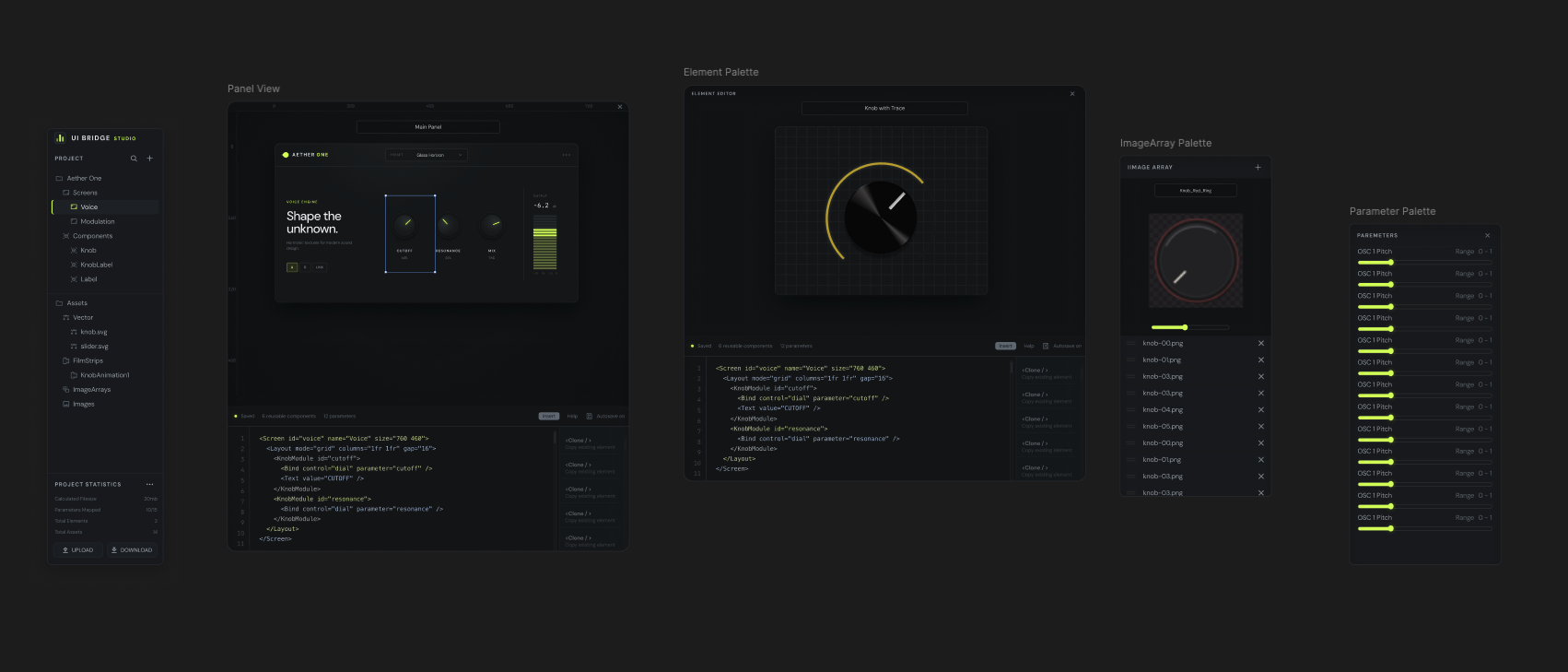
The palette-and-pasteboard model supports visual composition while the XML view exposes the corresponding structure for inspection and technical work.
Building the XML Interface System
The XML representation is the connection between visual authoring and application generation. Its purpose is to describe interface structure in a form that can be processed consistently, rather than leave implementation to interpretation of a static mockup.
The illustrated definition shows a screen, layout structure, reusable modules, and control bindings. This makes the relationship between composition and implementation explicit: a control is not only a shape on the pasteboard, but an element with a defined role in the resulting interface.
Designing that representation involves deciding what belongs in the interface definition, which relationships must be expressed, and how reusable structures should be represented without locking every screen into a single composition.
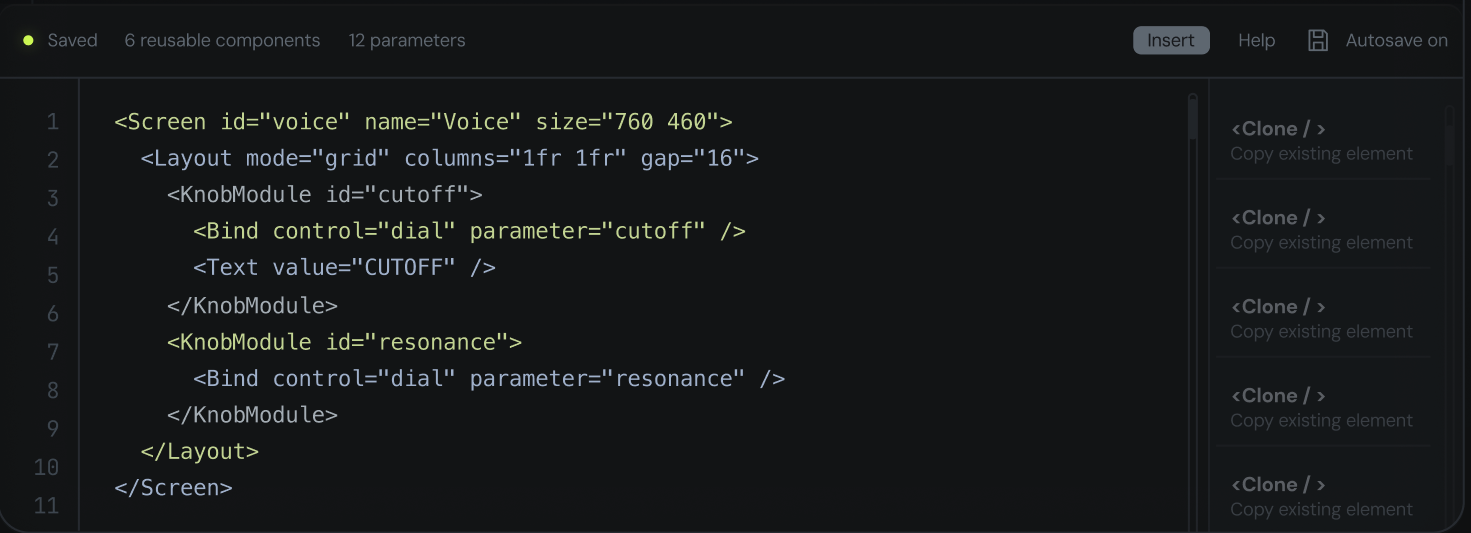
The XML representation describes interface structure in a form that can be processed consistently, rather than leave implementation to interpretation of a static mockup.
Translating Definitions Into Application Output
The intended pipeline takes the interface definition and transpiles it into output that can compile within the target application environment. The requirement is practical: the output must participate in a real application, not merely resemble one in a browser or preview.
That makes the transformation layer an essential part of the work. The visual model, the XML structure, and the generated implementation need to agree about what each element means and how its relationships are expressed.
The target is directly compilable interface output without a separate cleanup pass on generated files. That requirement applies to the interface layer; application logic, integration, and other developer responsibilities still need their own implementation.
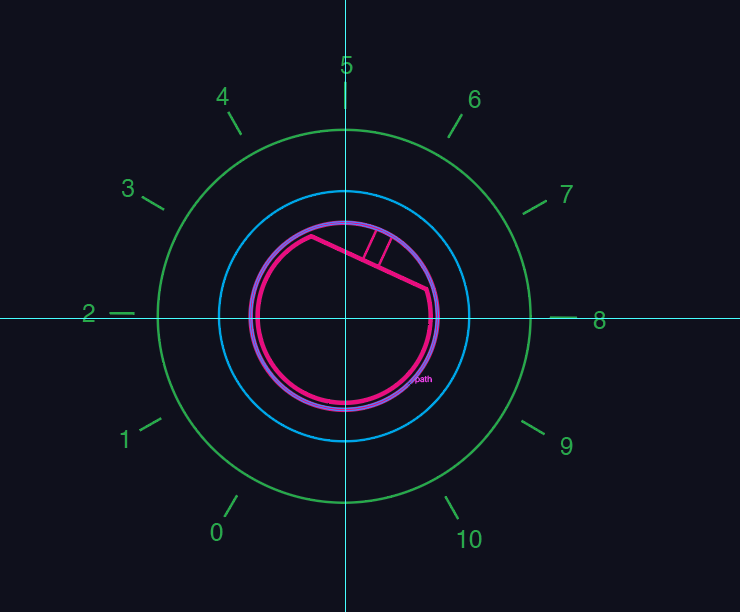
SVG support allows for scalable, vector-based representation of interface elements, which can be used in both the authoring environment and the generated output.
Making Components Reusable
Reusable elements provide the building blocks for more than one screen or arrangement. The editor design exposes components such as dials, level meters, and segmented controls, while the underlying system needs to preserve the distinction between a reusable definition and its use within a particular interface.
The aim is to make adaptation possible without rebuilding the entire system whenever an element or requirement changes. Visual consistency and technical modularity are connected here: the same structure that supports reuse also needs to remain understandable inside the authoring experience.
Supporting Updates Without Overwriting Integration Work
The ownership concept becomes an implementation requirement at the boundary between generated interface output and developer-owned behavior. Changes to the design should update the relevant interface elements without requiring manual edits that generation will later erase.
The strongest demonstration is a complete update cycle: begin with a working interface, change a design-owned property, regenerate the output, compile it again, and confirm that the existing behavior remains connected.
Results and Current State
The work brings together a visual authoring model, an XML interface representation, and a planned compilation path within one system. Its value is best understood by following a single interface element from composition to working output, then showing how that element can change without breaking the surrounding application.